


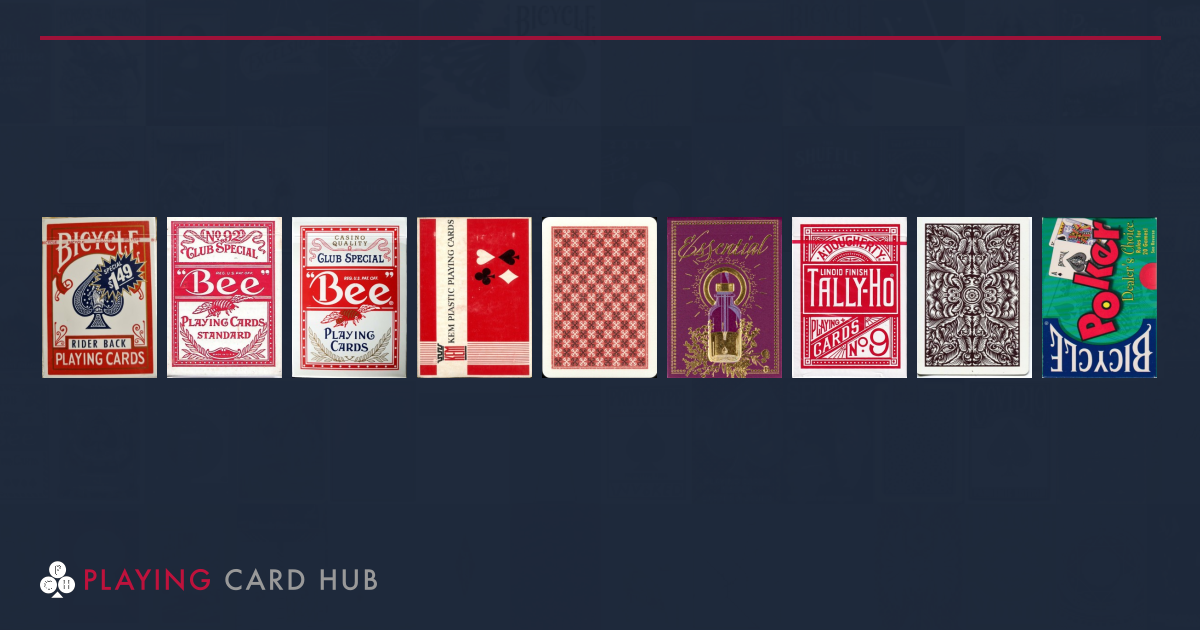
Every regular card game has a deck graveyard. Cards that went soft after a month, decks that clumped in summer humidity, a jack with a crease so obvious it might as well be face up. If you play a lot, durability isn't a nice-to-have. It's the whole point.
The good news is that durability isn't a mystery. It comes down to two things: what the cards are made of (the stock) and what's on the surface (the finish). This guide compares the main options, explains which games are hardest on cards, and covers the kinds of decks worth tracking on PlayingCardHub if you want cards that last. For the full technical breakdown, see our guide to playing card finishes and stocks.
Why playing cards wear out
Cards fail in a few predictable ways:
- Bending and creasing. Riffle shuffles, bridges and squeezing hands bend cards. Paper eventually loses its snap and creases.
- Clumping. Oils from hands, moisture and wear on the coating make cards stick together.
- Edge wear. Edges fray and chip, especially on cheap stock.
- Marking. Small nicks and stains make individual cards recognizable, which ruins a fair game.
- Humidity. Paper absorbs moisture, swells and warps.
A durable deck resists all of these. Different materials handle them very differently.
Stock compared: paper, plastic-coated paper and 100% plastic
Uncoated or lightly coated paper
The cheapest decks. They feel fine out of the box but wear quickly, clump and crease. Fine for a craft project; not for a regular game.
Coated paper (the standard for most decks)
Most quality decks use layered paper stock with a coating on the surface. This is what you get from makers like Bicycle and Bee, and most custom decks. A good coated paper deck handles beautifully and lasts well for occasional play. Under heavy use, it will eventually soften.
 Rider Back [Bicycle]
USPCC
 Bee Club Special Standard Red
USPCC
1998
Premium paper stocks
Some printers offer thicker or stiffer premium stocks. These often feel snappier and can last longer than a standard deck, especially under riffle shuffling. Many collectors and cardists prefer them for their feel. They're still paper, though, and still vulnerable to water.
 Bee Standard Index Red
USPCC
4/5
100% plastic
Fully plastic cards are the durability champions. Makers like KEM and Copag are known for plastic decks used in serious poker. Plastic resists creasing, bounces back from bending, shrugs off spills and can be wiped clean.
 Kem Size Poker Club Green
KEM Playing Cards
 Masters Red And Black [Copag]
Copag
The tradeoff is feel. Plastic is slicker and heavier, and new players often find it harder to riffle. It's also not the first choice for magic or cardistry.
Finishes compared
The finish is the coating that controls how cards slide against each other.
- Embossed finishes, like the air-cushion style finish on many classic decks, add a fine texture that reduces friction and helps fanning.
- Smooth finishes feel slicker and more uniform. Some players love them; others find they clump sooner.
- Linen and other textured finishes are common on decks from European and Asian printers and can feel very different from US-printed decks.
A good finish keeps a deck handling well for longer. Once the finish wears down, cards start sticking, which is often the first sign a paper deck is near the end.
 Essential (Lavender)
Jocu Playing Cards
2021
3.8/5
 Tally-Ho Fan Back Red
USPCC
2009
3/5
Which card games are hardest on decks?
- Poker. Constant shuffling and pitching. Durability matters most here.
- Spoons, Slapjack and Speed. Fast, physical games where cards get grabbed and slammed.
- Euchre and Pinochle. Shorter decks get shuffled a lot.
- Solitaire and Patience. Gentle on cards, so almost any deck works.
- Kids' games. Kids are rough on everything. Plastic or thick paper helps.
 Pinochle Brown [Kem]
KEM Playing Cards
Making any deck last longer
Even the toughest deck lasts longer with care:
- Wash your hands before playing. Oils are a big cause of clumping.
- Store decks in their tucks or a case, away from heat and humidity. See our guide to storing playing cards.
- Rotate decks. Use two decks and alternate them.
- Don't over-bend. Bridges and springs look cool but stress paper cards.
- Fan-test old decks. If a deck no longer fans evenly, its finish is worn.
How to tell when a deck is done
Collectors and serious players develop a feel for this, but a few signs are easy to spot. Spread the deck face down across the table: if it no longer spreads in an even ribbon and instead breaks into clumps, the finish is going. Riffle it: if the cards stop springing back flat and start to stay curved, the stock has lost its memory. Hold it up to the light at an angle: scuffs and dull patches on the backs are exactly the kind of marks a sharp-eyed player will learn to read. And listen to it. A fresh deck has a crisp snap when you riffle it, while a tired deck sounds soft and muffled. When two or more of these show up, it's time to retire the deck to the kids' game drawer and bring out a fresh one for the table.
Paper or plastic: our recommendation
If you play weekly or more: go plastic for your main game. You'll replace decks far less often.
If you play casually: a quality coated paper deck is perfect and feels great.
If you're a collector who also plays: keep separate decks. Use a durable plastic or casino deck for games, and keep your custom decks for display.
 Poker Set (Two Decks) [Bicycle] 2010
USPCC
2010
Track your game decks
When you rotate decks for regular games, it helps to know what you have. PlayingCardHub lets you add every deck to your collection, note which ones are in use, and keep a wishlist of decks you want to try next.
Our take
The best durable playing cards are the ones that match how hard you play. For heavy, weekly use, 100% plastic is hard to beat. For everything else, a quality coated paper deck with a good finish will serve you well, as long as you store it properly and retire it before it starts to clump.
FAQ
Q: What are the most durable playing cards? A: 100% plastic playing cards are generally the most durable. They resist bending, creasing and water, and can be wiped clean.
Q: Do plastic playing cards last longer than paper? A: Yes, often much longer under heavy use. Paper decks soften, clump and crease over time.
Q: What is a playing card finish? A: The finish is the coating on the card surface that controls how cards slide against each other. Embossed finishes add a subtle texture that helps cards fan evenly.
Q: Why do my playing cards stick together? A: Oil from hands, humidity and a worn finish cause clumping. Washing hands and storing decks dry helps.
Q: Are paper playing cards good enough for regular games? A: For occasional games, yes. For weekly poker or heavy play, plastic decks usually last longer.

