


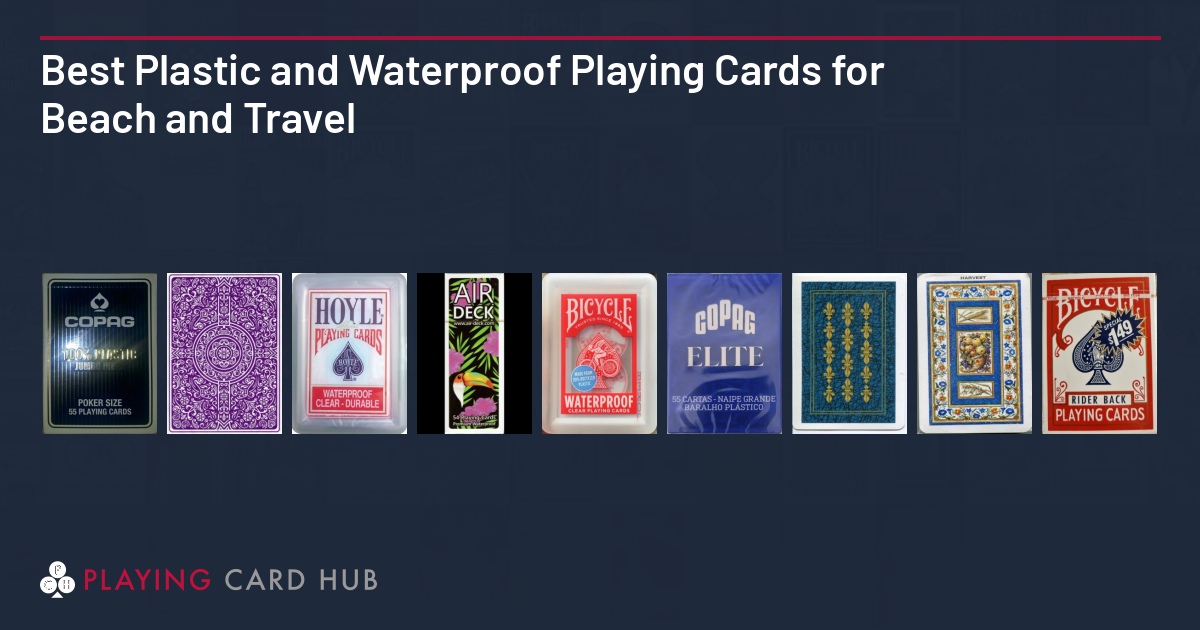
A paper deck and a beach day don't mix. Ten minutes in sea air and the cards start to curl. One splash from the pool and you've got a soggy brick. Leave the deck in a hot car and it warps into a shape no shuffle can fix.
That's what plastic and waterproof playing cards are for. They're the decks you can take anywhere: the beach, the pool, a camping trip, a boat, a long flight, or a cabin where everything feels a little damp. This guide explains the difference between plastic and "waterproof" decks, what actually holds up outside, and the kinds of decks worth adding to your PlayingCardHub wishlist before your next trip.
Plastic vs plastic-coated vs waterproof
These terms get mixed up a lot, so it's worth sorting them out.
100% plastic cards are made entirely of plastic, usually PVC or cellulose acetate. They're flexible, durable and water resistant, and many can be washed. Brands like KEM and Copag are known for fully plastic decks.
Plastic-coated paper cards are paper with a plastic-like coating. "Plastic coated" on a box usually means this. They handle humidity a little better than uncoated paper, but they're still paper inside and will be ruined by a soak.
Waterproof or "clear" plastic decks are fully plastic decks marketed specifically for water. Some are semi-transparent, which looks fun in a pool and makes them easy to spot if they sink.
The rule of thumb: if you might get it wet, make sure the box says 100% plastic, not plastic coated.
What makes a good outdoor or travel deck
- Fully plastic construction. The only real defense against water.
- Large indexes. Bright sun and glare make small indexes hard to read.
- A weighted or grippy finish. Lightweight cards blow away on a windy beach.
- A tough case. A plastic or metal deck case protects the cards and keeps sand out.
- Bright colors. High-contrast backs are easier to see and harder to lose in sand or grass.
Best for the beach
Wind and sand are the real enemies at the beach. Heavier plastic decks stay put better, and a case keeps grit out of your cards.
 Copag 100% Plastic Jumbo Index Blue
Copag
5/5
 Unique Purple [Copag]
Copag
Beach tip: play on a towel or a small board rather than directly on sand. Rinse plastic cards in fresh water afterward and let them dry fully before packing them away.
Best for the pool
For pool games, transparent or waterproof decks are the most fun. They float or sink depending on the material, so check before you test it in the deep end.
 Hoyle Clear Waterproof Plastic
USPCC
2011
3/5
 Air Deck 2.0 (Tropicana)
TipTop Things
2019
3/5
Chlorine and salt water can be harsh on any material over time, so rinse plastic cards after use.
Best for camping and boats
Damp air, morning dew and the odd spilled drink all make plastic the better choice outdoors. A tough case matters as much as the deck itself.
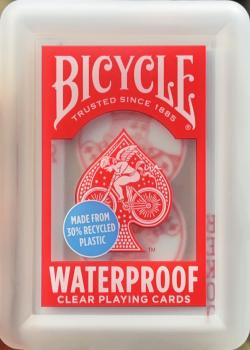 Waterproof [Bicycle]
USPCC
2024
3/5
Best for travel
On a plane, train or road trip, size and durability matter most. Bridge-size decks are narrower and easier to handle on a tray table. A plastic deck also survives being stuffed in a backpack pocket.
 Copag Elite (Blue)
Copag
2023
3/5

Travel tip: bring a small game list. Rummy, Crazy Eights, Spit and Cribbage all work on a small surface, and Solitaire works anywhere.
 Harvest Blue [Kem]
KEM Playing Cards
4/5
 Rider Back [Bicycle]
USPCC
Do plastic cards feel different?
Yes, and it's worth knowing before your trip. Plastic cards are slicker and springier than paper, and they can be harder to riffle shuffle at first. Some players find them heavier in the hand. Most people get used to them within a game or two, and many end up preferring them.
For a deeper look at how stocks and finishes affect handling, see our guide to playing card finishes and stocks.
How to care for plastic and waterproof cards
- Rinse after salt or chlorine. Fresh water and a gentle wipe.
- Dry fully. Lay cards flat or spread them out before packing.
- Keep out of extreme heat. Plastic can warp if left in a hot car or in direct sun for hours.
- Use a case. It protects edges and keeps sand out.
- Store flat at home. See our guide to storing playing cards.
Should collectors care about plastic decks?
Plastic decks aren't usually the stars of a collection, but they've got a place. Many collectors keep a plastic "user deck" for travel so their custom decks stay safe at home. Others collect casino plastic decks or specialty waterproof designs. Either way, it's worth tracking them on PlayingCardHub so you know which one you liked best for next summer.
Why we always pack a plastic deck
There's a simple reason so many card players keep a plastic deck in their travel bag: it removes the worry. Nobody has to hover over the cards when a drink gets set down, nobody has to call off the game when the wind picks up, and nobody has to explain to a host why their nice custom deck came back warped. A plastic deck lets you play anywhere without thinking about the cards at all, which is exactly what you want on a trip. Save your favorite art decks for the table at home, and let the plastic deck do the hard work outdoors.
Our take
If your cards are leaving the house, take plastic. A fully plastic deck with large indexes and a solid case will survive the beach, the pool and the backpack far better than any paper deck. Check the box for "100% plastic," rinse after salt or chlorine, and keep it out of a hot car, and one good deck can last you many summers.
FAQ
Q: Are plastic playing cards waterproof? A: 100% plastic cards are water resistant and many can be washed. Plastic-coated paper cards are not waterproof.
Q: What's the difference between plastic and plastic-coated playing cards? A: Plastic cards are made entirely of plastic. Plastic-coated cards are paper with a coating and can still be ruined by water.
Q: What are the best playing cards for the beach? A: Heavier 100% plastic decks with large indexes and a protective case work best, since they resist water, sand and wind.
Q: Can you play cards in a pool? A: Yes, with a fully plastic waterproof deck. Rinse the cards in fresh water afterward.
Q: Are plastic playing cards good for travel? A: Yes. They survive being packed, resist spills and last much longer than paper decks on the road.
Q: How do I clean plastic playing cards? A: Wipe them with a damp cloth or rinse in fresh water, then dry them fully before storing.

