


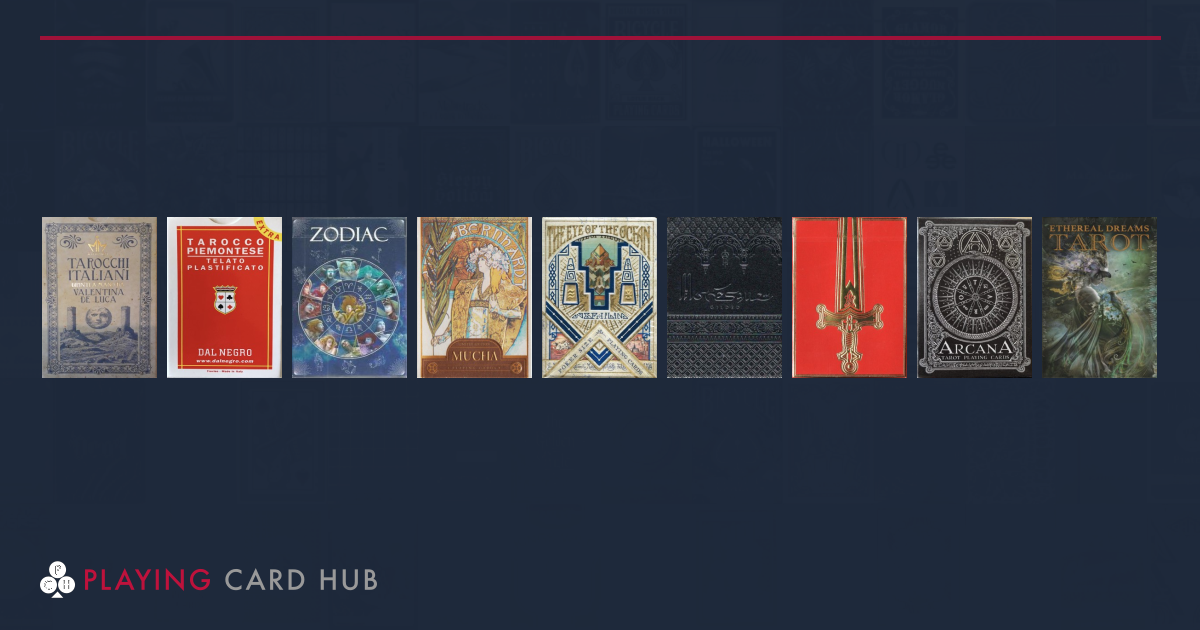
Tarot and playing cards are closer relatives than most people realize. Tarot decks began in Europe as playing cards for card games, and in parts of Europe tarot games are still played today. The four suits of the tarot's Minor Arcana map neatly onto the four suits of a standard deck, and many of the most beautiful art decks in the hobby borrow freely from tarot imagery.
That overlap makes "tarot playing cards" a fun corner to collect. Some decks are true tarot decks made for playing traditional games. Some are standard 52-card decks dressed in tarot-inspired art. And some are art objects first, made for display as much as for shuffling. This guide covers all three and the kinds of decks worth adding to your PlayingCardHub wishlist.
Tarot vs playing cards: what's the difference?
A standard playing card deck has 52 cards in four suits, plus jokers. A traditional tarot deck has 78 cards:
- 56 suit cards (the Minor Arcana) in four suits, usually cups, coins, swords and batons or wands. Each suit has numbered cards plus four court cards, adding a knight or cavalier to the familiar king, queen and jack.
- 22 trumps (the Major Arcana), including the well-known Fool, Magician and World cards.
Tarot decks made for card games, called tarocchi in Italian, often look different from the tarot decks used for readings. Many use traditional regional designs and simpler pip cards. Decks made for divination usually have fully illustrated minor cards.
When collectors search for tarot playing cards, they usually mean one of three things.
1. Traditional tarocchi and game tarot decks
These are the real thing: tarot decks made to be played. Italian and other European tarot patterns have centuries of history behind them, and modern makers continue to produce decks in these traditions as well as new interpretations.
A standout in our catalog is Tarocchi Italiani Matronua (The Matronua Tarot) from Matronua, listed on PlayingCardHub as a 2025 release. It's one of the decks collectors search for most when they look up tarot on our site, and it's a good example of a modern tarot that respects the Italian tradition.
 Tarocchi Italiani Matronua (The Matronua Tarot)
Matronua
2025
5/5
 Tarocco Piemontese Telato Plastificato Extra [Dal Negro]
Dal Negro
If you're drawn to history, look for decks that state which historical pattern they follow. Collectors often enjoy comparing different regional styles side by side.
2. Standard decks with tarot-inspired art
The most common way tarot shows up in playing cards is in art. Designers love tarot imagery: celestial motifs, ornate borders, symbolic court cards and dramatic Major Arcana-style figures. Many custom 52-card decks borrow this look, giving you a deck you can actually use for poker or magic while still feeling mystical.
 Zodiac
Fortuna Playing Cards
2020
2/5
 Mucha (Gismonda)
TCC Playing Cards
2022
4.5/5
These decks are a great entry point. They're playable, often printed on familiar stock, and they look striking fanned out on a table.
3. Art decks made for display
Some decks exist mostly to be looked at. Every card is illustrated, the tuck box is a small piece of art, and many collectors keep them sealed or behind glass. In this category the line between a tarot deck and a playing card deck gets blurry, and that's part of the appeal.
 The Eye Of The Ocean - Nephilim
Stockholm17
2024
4.2/5
 Moresque (Gilded)
OATH Playing Cards Co.
2022
4.5/5
When collecting art decks, pay attention to the artist and the print run. Decks from a single illustrator tend to have a more cohesive look, and limited printings are more likely to become hard to find later.
What to look for in a tarot or art deck
- Card count. Check whether you're looking at a 78-card tarot, a 52-card deck with jokers, or something else. Deck pages on PlayingCardHub list what's included where we have the information.
- Card size. Tarot cards are often larger than playing cards. That's lovely for art, but harder to shuffle.
- Stock and finish. Art decks don't always use the same stock as playing decks. If you plan to shuffle, look for a deck printed on familiar stock. Our guide to playing card finishes and stocks explains the differences.
- Edges. Gilded edges look beautiful on art decks but wear with heavy use.
- Packaging. Many tarot and art decks come in boxes rather than tucks, which changes how you'll store them.
Kings Wild Project and illustrated storytelling
If you love tarot because of the storytelling, illustrated decks from studios like Kings Wild Project scratch a similar itch. They don't always reference tarot directly, but the richly illustrated court cards and historical themes have a lot in common with the tarot tradition.
 Arthurian Holy Grail
Kings Wild Project
2020
4.8/5
 Arcana Full Tarot Dark V2 (One Piece Tuck)
Dead on Paper
2018
5/5
 Ethereal Dreams (Luxury Tarot)
Mind's Eye Playing Cards & Max Playing Cards
2022
4/5
Using tarot decks for card games
Yes, you can play with them. Tarot card games are still popular in parts of Europe, including French tarot and various Italian and Central European games. Many of these games use the trumps as a fifth suit that beats all the others. If you pick up a traditional tarocchi deck, learning one of these games is a great way to appreciate how the deck was meant to be used.
How to build a tarot and art deck collection
- Pick a focus. Traditional patterns, tarot-inspired 52-card decks, or display art decks.
- Follow artists. Many tarot and art decks come from independent illustrators. Following them is the best way to catch new releases.
- Track print runs. Note limited editions in your PlayingCardHub collection.
- Store carefully. Larger boxes and gilded edges need gentle storage. See our guide to storing playing cards.
- Photograph your favorites. Art decks deserve good photos. Our guide to photographing playing cards helps.
Our take
Tarot playing cards are a fun reminder that cards were art long before they were stocking stuffers. Start with a deck like The Matronua Tarot if you want a modern take on the Italian tradition, add a tarot-inspired 52-card deck you can actually play, and let your shelf fill up from there.
FAQ
Q: Can you play card games with tarot cards? A: Yes. Tarot decks began as playing cards, and tarot card games are still played in parts of Europe today.
Q: What is the difference between a tarot deck and a playing card deck? A: A standard deck has 52 cards in four suits. A traditional tarot deck has 78 cards: 56 suit cards with an extra court card per suit, plus 22 trumps.
Q: What is the Matronua Tarot? A: Tarocchi Italiani Matronua (The Matronua Tarot) is a 2025 deck from Matronua, listed in the PlayingCardHub database. Its deck page has the details we've catalogued.
Q: Are tarot-inspired playing cards good for regular games? A: Many are. A 52-card deck with tarot-inspired art plays just like a standard deck, as long as the indexes are clear.
Q: How do I track tarot decks in my collection? A: Add them to your PlayingCardHub collection or wishlist from each deck's page, just like any other deck.

