
Every home game eventually hits the same moment. Someone tries to shuffle, the deck clumps, a corner is bent, and one card has a crease that everyone at the table can spot from across the felt. That's when you realize the deck matters more than you thought.
The best playing cards for poker do three jobs well. They're easy to read from a seat away, they shuffle and pitch cleanly, and they last long enough that nobody can mark a card by its wear. This guide walks through what to look for, the tradeoff between plastic and paper, and the kinds of decks worth adding to your PlayingCardHub wishlist before your next game.
What makes a good poker deck
Readable indexes. In poker, players glance at their hole cards and look at the board from across the table. Large, clear indexes make that easier, especially in dim lighting or for anyone who doesn't love reading glasses.
Durability. A poker deck takes a beating: riffle shuffles, pitching, squeezing, and the occasional spilled drink. Cards that hold their shape and snap last longer and keep the game fair.
Bridge or poker size. Poker-size cards are wider. Bridge-size cards are narrower and easier to hold in larger hands, which is why many casinos use them for poker. Either works; it's a matter of preference.
A back that hides wear. Borderless backs with a dense pattern hide small marks and nicks better than plain backs with white borders.
Two decks, two colors. Most serious games keep two decks with different back colors, so one can be shuffled while the other is in play.
Index sizes explained
You'll see a few index styles on poker decks:
- Standard index. The classic corner size. Fine for most games.
- Jumbo index. Very large numbers and suits that take up much of the card face. Great for readability, though some players feel they lose the look of the court cards.
- Peek index. Larger corner indexes designed for quick looks when you squeeze cards.
- Four-color decks. Each suit gets its own color, often blue diamonds and green clubs. Some online players prefer these because it's harder to confuse flushes.
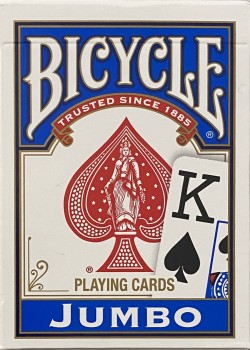 Jumbo Index 140 Years Blue
Bicycle
5/5
 Copag 4 Colour Blue
Copag
If you host older players, or your game runs late, a jumbo or peek index deck is the most considerate upgrade you can make.
Plastic vs paper: which is better for poker?
This is the biggest choice, and it divides home games.
Plastic decks
Fully plastic decks, from makers like KEM and Copag, are the go-to for durability. They resist creasing, bounce back when bent, and can be wiped clean. A good plastic deck can outlast many paper decks under the same use, which is why they're common in serious card rooms.
The downsides: plastic decks cost more up front, feel slicker in the hand, and shuffle differently. Some players love the snap; others find plastic too slippery for a clean riffle at first.
 Harvest Blue [Kem]
KEM Playing Cards
4/5
 Copag 1546 Neoteric Red/Blue
Copag
5/5
Paper decks
Paper decks with a coated finish, such as Bicycle and Bee, are what most home games start with. They shuffle naturally, cost less, and feel familiar. The catch is they wear out faster and can bend or mark over a long night.
 Bee Club Special Standard Red
USPCC
1998
 Rider Back [Bicycle]
USPCC
For a deeper look at stocks and coatings, read our guide to playing card finishes and stocks.
Which should you choose?
If your game runs weekly, go plastic. You'll spend less replacing decks and avoid arguments over marked cards. If you play a few times a year, a stack of good paper decks is easier and lets you rotate designs. Plenty of hosts keep both: plastic for the main game, paper for casual side games and the late-night round of something sillier.
Casino decks at home
There's a reason casino-style decks are popular at home games. They're designed for exactly this use, with borderless backs that hide wear and stock built for heavy shuffling. Retired casino decks also add atmosphere. Just know that many have a hole punched through them or a clipped corner, which marks them as canceled. That's fine for fun but can be distracting in a serious game. Our collector's guide to casino playing cards covers how to spot canceled decks.
 “Bee” - Bellagio
USPCC
1996
3/5
 Paisley Red [Kem]
KEM Playing Cards
5/5
Setting up a better poker night
A few small upgrades make a home game feel more polished:
- Use two decks. Alternate between hands to keep the game moving.
- Add a cut card. A plastic cut card protects the bottom card from being flashed.
- Retire decks on schedule. When a deck gets sticky, bent or marked, swap it.
- Keep decks dry. Paper decks swell and clump in humidity. Store them in their tuck boxes, or in a deck case for longer life. Our guide to storing playing cards has tips.
- Pick a back everyone can see. A good contrast between back colors avoids mixed decks.
Decks for themed poker nights
Not every poker night needs to look like a casino. Custom decks with great art can make a game feel special, especially for a birthday or holiday game. Just stick to custom decks with clear, standard indexes, and avoid heavily stylized faces that slow the game down.
 Cherry Casino Tahoe Blue
Murphys Magic & Pure Imagination Projects
2018
4/5
Track your poker decks
Once you start caring about poker decks, they add up fast. PlayingCardHub lets you track every deck you own, note which ones are in rotation, and keep a wishlist of decks you want to try. It's also an easy way to remember which plastic deck your group liked best.
Our take
The best playing cards for poker are the ones nobody at the table notices. They're readable, they shuffle without a fight, and they last long enough that nobody can tell one card from another by its wear. For a regular game, that usually means a plastic deck with a clear index. For casual nights, a couple of solid paper casino decks will do the job.
FAQ
Q: What playing cards do casinos use for poker? A: Many card rooms use fully plastic, bridge-size decks because they're durable and harder to mark. The specific brand varies by casino.
Q: Are plastic playing cards better for poker? A: For regular games, usually yes. Plastic cards last longer, resist creasing and can be cleaned. Paper decks cost less and feel more familiar for casual play.
Q: What is a jumbo index? A: A jumbo index uses very large numbers and suit symbols in the corners, making cards easier to read from a distance.
Q: Should I use poker size or bridge size cards? A: Both work. Poker-size cards are wider. Bridge-size cards are narrower and easier to hold, which is why many casinos use them for poker.
Q: How often should I replace a poker deck? A: Replace paper decks when they get sticky, bent or marked. Plastic decks last much longer, but retire them if they warp or show marks.
Q: What is a four-color deck? A: A four-color deck gives each suit its own color, making it easier to tell suits apart at a glance.