
![Zombie [Bicycle] Front Thumbnail Image](https://d10gxh7wbuectb.cloudfront.net/decks/350x250/2322626082_front.jpg)


![Eclipse [Bicycle] Front Thumbnail Image](https://d10gxh7wbuectb.cloudfront.net/decks/350x250/3042645098_front.jpg)
![Faith [Bicycle] Front Thumbnail Image](https://d10gxh7wbuectb.cloudfront.net/decks/350x250/743589328_front.jpg)

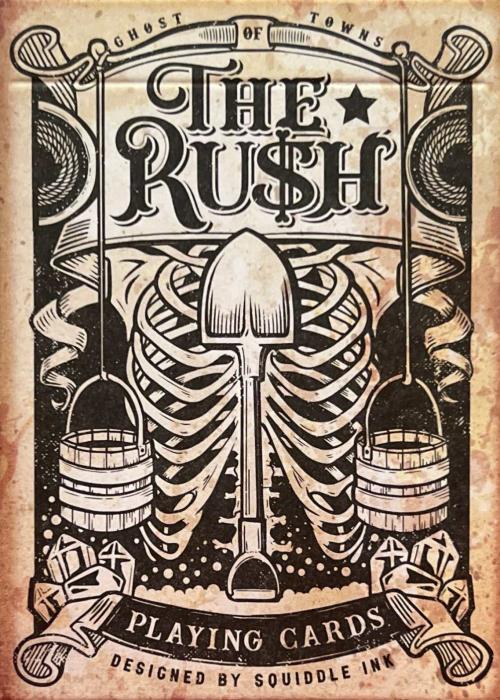
The Rush playing cards, a deck that takes you deep into the barren ghost towns of the frontier. Grab your pickaxes and shovels and pay tribute to notable figures of the California Goldrush. Set in the incredible landscape of the Sierra Nevada, stretching to the West Coast of San Francisco. This deck incorporates many symbolic icons of Californian boomtowns, wilderness and the creation of the Central Pacific Railroad, such as pine cones, shovels, wagon wheels and train tracks.
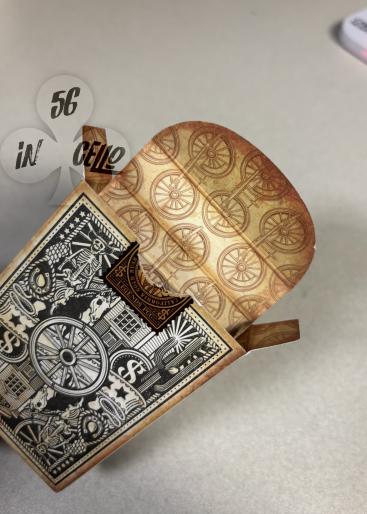
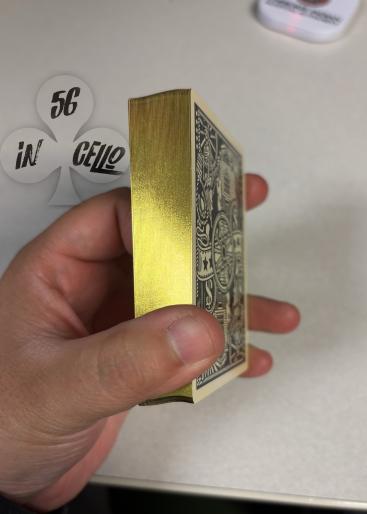
The Tuck box features the ribs of a ghost prospector and an antique shovel like those used to unearth veins of pay dirt. The inside of the tuck will be printed with a repeating pattern of steam-train wheels in a warm sepia tone. The cards will feature gold-gilt edges, representing the shimmering flakes in the bottom of a prospector's sifting pan. The card back depicts a skeletal forty-niner riding a horse through a barren ghost town in the California hills.
James W. Marshall discovered gold at the creek down at Sutter’s Sawmill in Coloma, California, on January 24th 1848. It was on that day that the creek became the beacon for the many prospectors who rushed the area, hoping to find their riches in the log jams and idle pools of the American River. The Court Cards depict real figures from this era, including the Big Four railroad magnates, gunslingers, saloon-hearts, madams and more. Characters like Leyland Standford, the famous Railroad executive and president of the Central Pacific Railroad. Also, Levi Strauss, who opened the dry goods store in San Francisco, which became the commercial hub of the California Gold Rush.
The Aces of Spades reads "Those That Sold Shovels" representing figures such as Samual Brannan, who profiteered from the gold rush by buying up supplies of mining equipment and selling them to the miners arriving in San Francisco. Brannan also founded the California Star newspaper around this time, which he used to promote the Gold discovery. The aces in this deck all feature tributes to this era. Stacey has created an illustrated newspaper that expands on the lore behind this deck, which is available as an add-on. There is also an antique two-sided coin available, featuring the bust of James W. Marshall's ghost.
The pips on the number cards descend in size, and the twos and threes feature ears of wheat. John Sutter, the mill owner whose land became the site of the first gold discovery, famously cultivated wheat and raised cattle.
The Joker is a tribute to the posters seen in the makeshift gambling halls, advertising that night's card game. Although poker was a highly popular game in that era, Faro, also known as 'Buck the Tiger', was played in saloons across the gold rush towns.
The cards will be printed by Legends Playing Card Co using a classic finish. The tuck will feature a preium matte finish, and the cards will have a gold-gilt edge.